
Cape Coral Previous Resident Sources
A backward address search works best when each record is used for the time span and fact it can support. Lee County deeds extend well before Cape Coral became a city, while permits and city files help date the later shift from an empty lot to a finished home. The public census stops before most Cape Coral growth. Local directory runs remain unverified, so a librarian must confirm that a volume covers the right place and year.
| Record source | Known time span | Custodian or access point | Evidence found |
|---|---|---|---|
| Lee Official Records | 1887 to present | Lee County Clerk | Deeds, mortgages, plats, liens, and recorded probate evidence |
| Property Appraiser roll | Current roll with sales and parcel history | Lee Property Appraiser | Owner, site and mailing addresses, STRAP, legal description, sales |
| Cape Coral permits | Legacy archive and current EnerGov | City Development Services and Records Management | Construction, alteration, owner, contractor, and dated inspections |
| Federal census | Public through 1950 | Fort Myers Genealogy Room and federal sources | Named households before modern Cape Coral development |
| Directories | Exact Cape Coral runs unverified | Lee Library and State Library | Occupants by address when a reverse section exists |
| Probate and obituaries | Case and publication dependent | Lee Clerk, library, and newspapers | Deaths, relatives, representatives, and estate endpoints |
For most previous residents, begin with the current parcel card and move back through recorded transfers. Use permits to date the building, not just the land. Add a directory, census, voter, or obituary record only when the goal shifts from owners to people who likely occupied the address.
Start Cape Coral Address History
The Lee Property Appraiser property search ties a Cape Coral street address to its current STRAP, Folio, legal description, owner of record, sales, permits, parcel-number history, and Address History maintained by E911. Keep both the Site Address and owner mailing address. The first describes the parcel; the second is where the tax bill goes and may be a trust, manager, post office box, or out-of-state contact.
The parcel card can also show a first tax-roll or actual construction year, structure details, past sales, public instrument references, alternate addresses, and prior STRAP numbers. Homestead supports owner occupancy for a tax year, but it does not name all members of a household or prove current presence. “Owner of Record” can also differ from the fee-simple title party, so the latest deed still needs review.
Preserve the complete ownership display as well as the short owner label. Trust names, co-owners, and mailing-address changes can point to additional deed searches. Building characteristics, aerial years, flood and storm fields, and the parcel's sales panel can help place physical changes in order. They remain supporting evidence. The recorded instrument is the source for a land transfer, while the city permit file supplies the dates for approved work.
The sample Lee parcel page shows the type of ownership, sale, building, permit, and address-history panels used in this search.
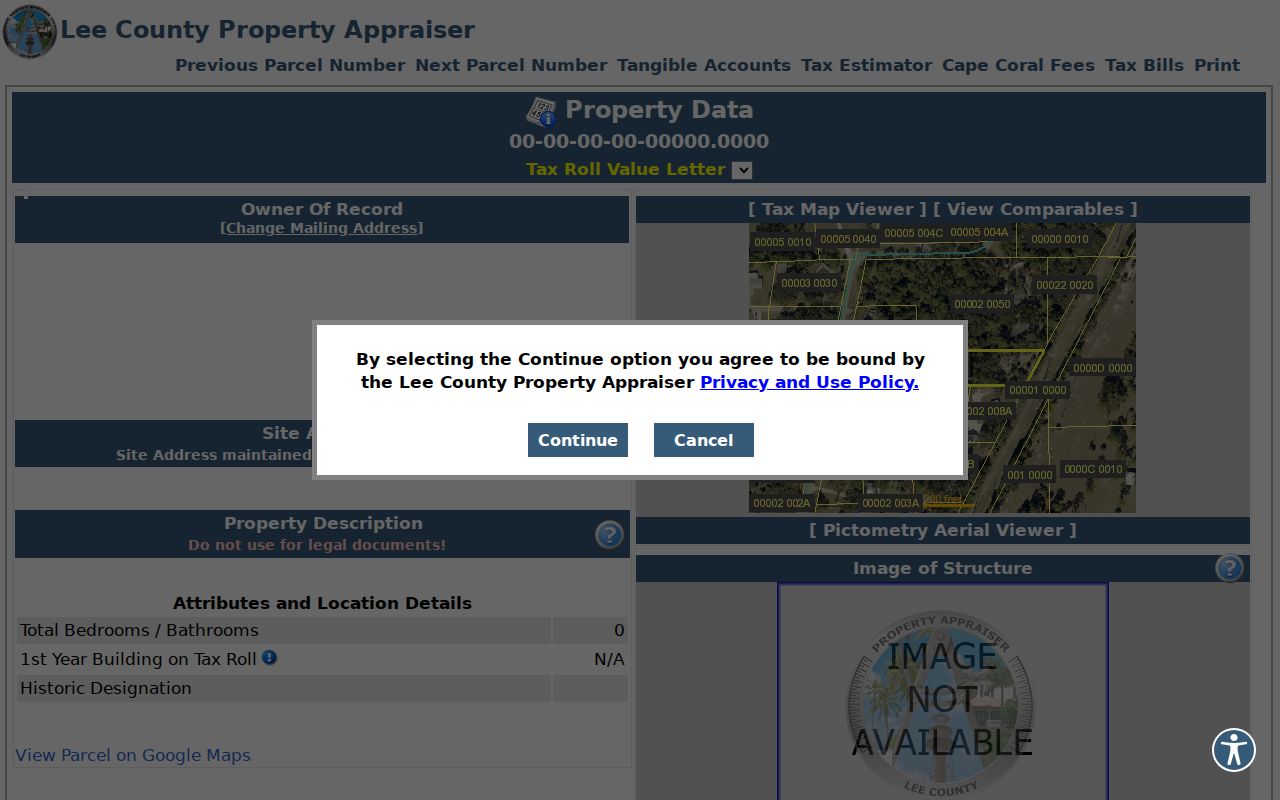
Those linked panels provide the stable keys needed before any older name is followed into another index.
Trace Cape Coral Deeds Backward
A deed chain follows the land from one recorded transfer to the transfer before it. Lee Official Records reach 1887, but the search defaults to a much later start date. Change that date when looking for past residents, and search the last name with a first initial if a full-name query misses an instrument.
- Record the current owner, STRAP, legal description, and latest instrument from the parcel card.
- Open the latest deed and copy its grantor, grantee, recording date, instrument or book/page, and land description.
- Search the seller, who is the grantor on that deed, as a grantee during the earlier period when that party acquired the parcel.
- Repeat with spouse, trust, or company variants. Check Sales/Transactions and parcel-number history when names conflict.
- If the public image is restricted or absent, request it online, by mail, or at the Cape Coral or Fort Myers Clerk counter.
- Grantor
- The party transferring an interest in land.
- Grantee
- The party receiving that recorded interest.
- Chain of title
- The linked sequence of transfers for one parcel.
- Legal description
- The lot, block, subdivision, or section-based land identity that can survive an address change.
The Lee Clerk copy service offers free viewing and printing of open images, online e-certification, counter service, and mail orders. A mail request should include the instrument or book/page, recorded name, payment, and a self-addressed stamped envelope.
Keep Cape Coral Parcels Continuous
An old address can fail even when the land record is present. Cape Coral addresses may change after construction, a lot split or combination, an alternate address assignment, or E911 maintenance. Repeated numbered roads also require the NW, NE, SW, or SE quadrant and the exact road type. Street, Terrace, Avenue, Place, Lane, and Court are not safe substitutes for one another.
When the words stop matching, pivot to the STRAP, prior STRAP, lot and block, subdivision, and deed instrument. Lee E911 maintains site addresses and can be reached through EAddressing@leegov.com for address questions tied to lot work. This method follows the land while the label changes and helps separate a genuine gap from a failed text search.
Note: No authoritative citywide Cape Coral street-renumbering date or renamed-street list was verified, so each address must be checked on its own record.
Cape Coral Permits Date Occupancy
Deeds can date ownership of bare land years before anyone lived there. The Cape Coral EnerGov guide explains the public Search and Map paths for permits, plans, inspections, code cases, requests, and licenses. Useful fields include application, issue, final, expiration, and last-inspection dates, along with work class, parcel, address, value, owner, contractor, occupancy, zoning, land use, and utility indicators.
A city audit counted 620,000 migrated legacy permits and 3.2 million inspections when EnerGov launched in 2022. That launch year is not the start of permit coverage. Preserve issue and final dates separately, because a sale, permit application, completed structure, and move-in do not occur on the same day. Dock, seawall, flood, and canal-related records can be especially useful in Cape Coral.
The official EnerGov access page shows the city route for searching this permit history.
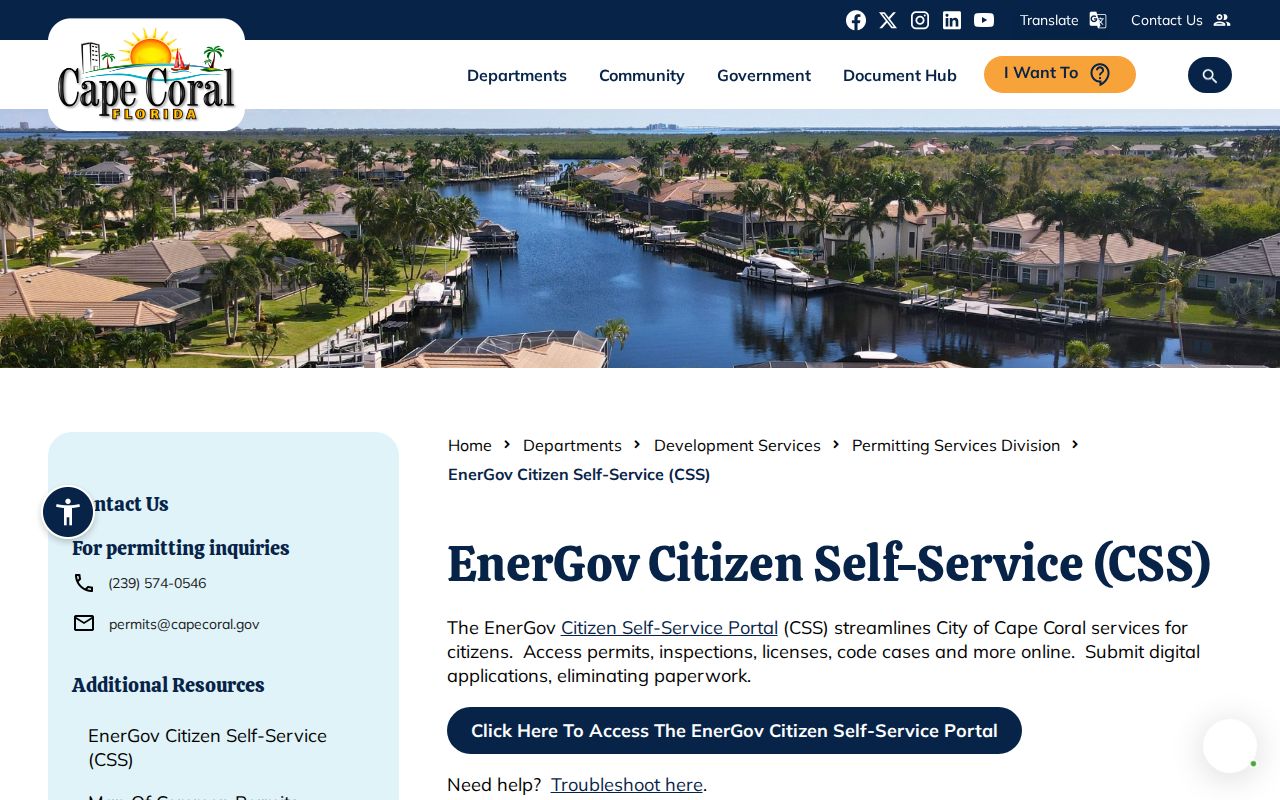
If an older plan or elevation certificate is missing online, request the unscanned material from City Records Management.
Previous Residents Before Cape Coral
Lee County was created in 1887, and its Official Records begin that year. Cape Coral developed as a late-1950s subdivision and incorporated in 1970. Leonard and Jack Rosen marketed hundreds of thousands of home sites, many through installment sales to buyers outside Florida. An early deed can therefore name a remote lot buyer rather than a Cape Coral resident.
The Lee County history record supplies the county timeline behind those older instruments.
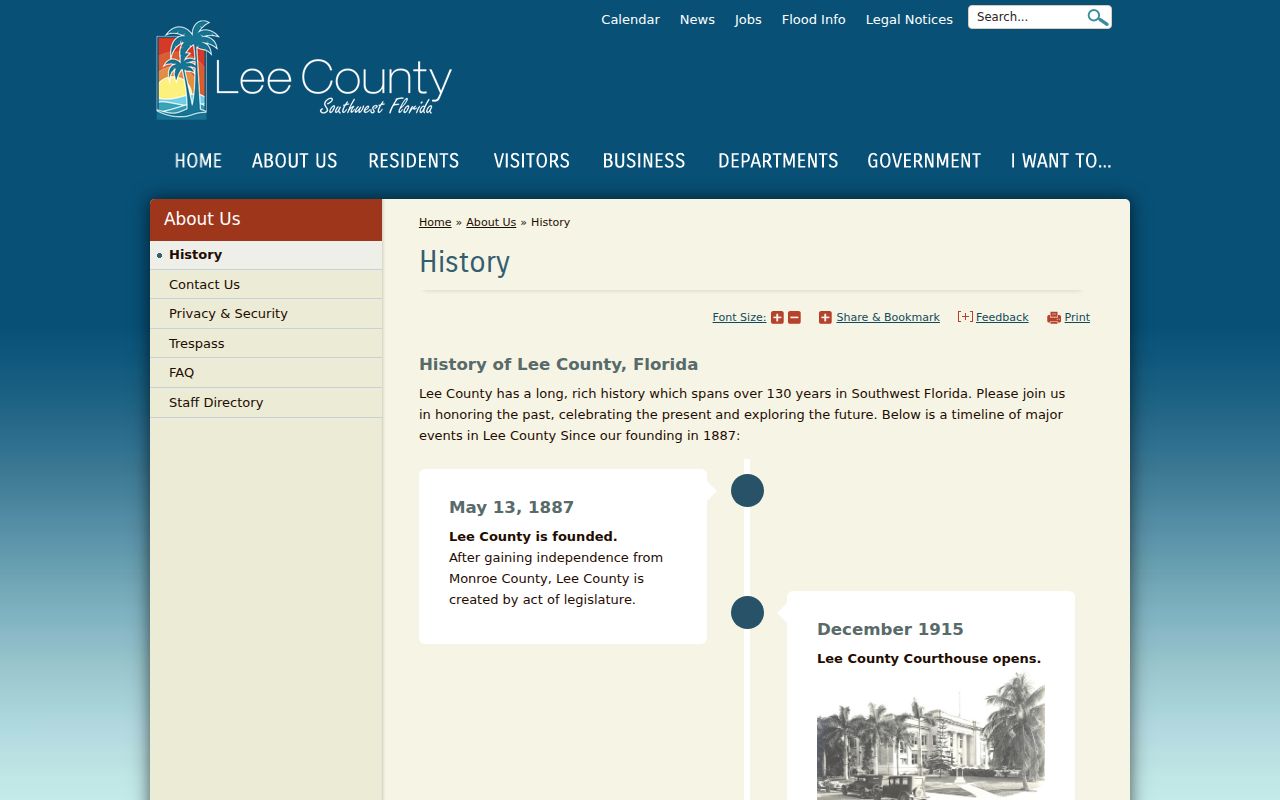
For an early parcel, the best occupancy marker may be a later permit, directory entry, voter record, or census line rather than the first land purchase.
South Cape generally has an earlier and denser trail of municipal activity. North Cape may show decades of transfers followed by a recent certificate of occupancy. This local split is why title dates and occupancy dates must remain separate.
Confirm Cape Coral Past Households
Owners are only one layer of the past. A reverse or criss-cross directory, if a suitable local volume exists, reads from street address to occupant. A regular city directory may show a surname, given name, spouse, widow notation, work, home and business addresses, and publisher abbreviations. Exact Cape Coral publishers, year runs, and reverse sections were not exposed in the official online catalogs, so do not assume a volume exists.
- Ask the Fort Myers Regional Library Genealogy Room to confirm the city, publisher, year, and whether the volume has a reverse section.
- Copy the full entry and abbreviation key, then check the editions immediately before and after it.
- Pair pre-1951 entries with released census schedules where geography permits, while recognizing that modern Cape Coral largely postdates the latest public census.
- Compare each occupant clue with deeds, permits, tax rolls, and probate rather than treating one omitted directory entry as a move.
The collections and reading method are covered more fully on the Cape Coral city directory page. The Genealogy Room also offers staff help, FamilySearch Affiliate access on library computers, microfilm, interlibrary loan, and free electronic copies.
The Cape Coral Museum of History preserves Rosen-era photographs, artifacts, and local documents that may add context to an address.

Museum material is a strong fallback for developer-era context, but contact staff before claiming that a named index is available.
Close a Cape Coral Resident Trail
Probate and obituaries often close the trail after a former owner or occupant dies. Search the Lee court division for the estate caption, representative, will, petitions, and distribution filings. A probate case may establish name variants, relatives, or an estate endpoint. The public docket does not guarantee that every image is online, and sealed, purged, or confidential material remains unavailable.
When a docket image is missing, Lee Clerk offers several fallbacks: registered Court Records Inquiry access, an e-certified order, a public-record request, the Justice Center, the Cape Coral branch, or mail. Probate is handled by the Clerk rather than a separate county office. Keep the case number and party role with each copied fact, since an heir, representative, creditor, and decedent have different meanings in an estate file.
Obituaries can add relatives, former places, and burial details, but they are often supplied by family or a publisher. Check key facts against the court file, recorded death evidence, deed, or released vital record. The Fort Myers genealogy collection and newspaper microfilm are practical fallbacks when an online search is thin. There is no verified city cemetery database in the research.
Lawful use. Research previous residents for house history, genealogy, or an estate matter. Never use an address trail to watch, harass, or harm a living person.