
Cape Coral Directory Collection Paths
No official catalog page exposed a verified Cape Coral title-by-title run, publisher list, reverse-directory span, or digitized local sample. That gap should shape the search. Start with the repositories that can confirm a city, county, or suburban volume, then record its exact title and year before relying on an entry. Earlier candidates may appear under Fort Myers or Lee County because Cape Coral developed late and did not incorporate until 1970.
| Collection | Years | Where Held | Access |
|---|---|---|---|
| Florida city directories | Early 1900s to present statewide | State Library of Florida | Search city/year; materials used on site |
| Florida federal census microfilm | 1830-1930 | Fort Myers Genealogy Room | Library research and microfilm |
| Florida state census | 1885 | Fort Myers Genealogy Room | Library research |
| FamilySearch affiliate images | Collection-dependent | Eligible Lee Library computers | Enhanced image access on site |
| Developer-era archives | Cape Coral history | Cape Coral Museum of History | Contact museum; index not promised |
| Reverse or telephone directories | Exact local runs unverified | Ask Lee Library and State Library | Reference check or interlibrary loan |
This coverage table distinguishes confirmed collections from a search lead. It does not imply that every statewide directory range includes Cape Coral. Call the Fort Myers genealogy desk at 239-479-4636 or the State Library at 850-245-6682 to verify the publisher, year, format, and call number.
Cape Coral Directory Era
Lee County began in 1887, and the county deed index starts in that year. Cape Coral's own community story is much later. Leonard and Jack Rosen began selling the planned subdivision in the late 1950s. The city incorporated in 1970. A directory search therefore crosses several names and record eras even though the land record remains in Lee County.
The comparison matters. A deed can name an out-of-state installment buyer years before a house, permit, registered voter, or directory entry shows someone at the lot. Cape Coral's early national sales campaign produced a sharp split between title and occupancy. Treat a remote purchaser as an owner unless another record places that household on the site.
| 1887 | Lee County was created, and searchable Official Records begin. |
|---|---|
| Late 1950s | Rosen-era subdivision and national lot sales began. |
| 1970 | Cape Coral incorporated, marking the municipal-record era. |
| 1980 | The local Historical Society traces its founding to this year. |
| 1987 | The Cape Coral Museum of History opened. |
Research did not verify the first or last printed Cape Coral volume year. The timeline describes the local record context, not an invented publication run.
Verify Cape Coral Directory Years
The State Library of Florida city-directory collection spans the early 1900s to the present across Florida and can be searched by city and year. Its materials are described as on-site holdings in Tallahassee. Search Cape Coral first, then test Fort Myers, Lee County, suburban, and telephone-directory wording. Ask staff to confirm the full title, publisher, year, and whether the item has a street-order section.
The state collection page is the official starting point.
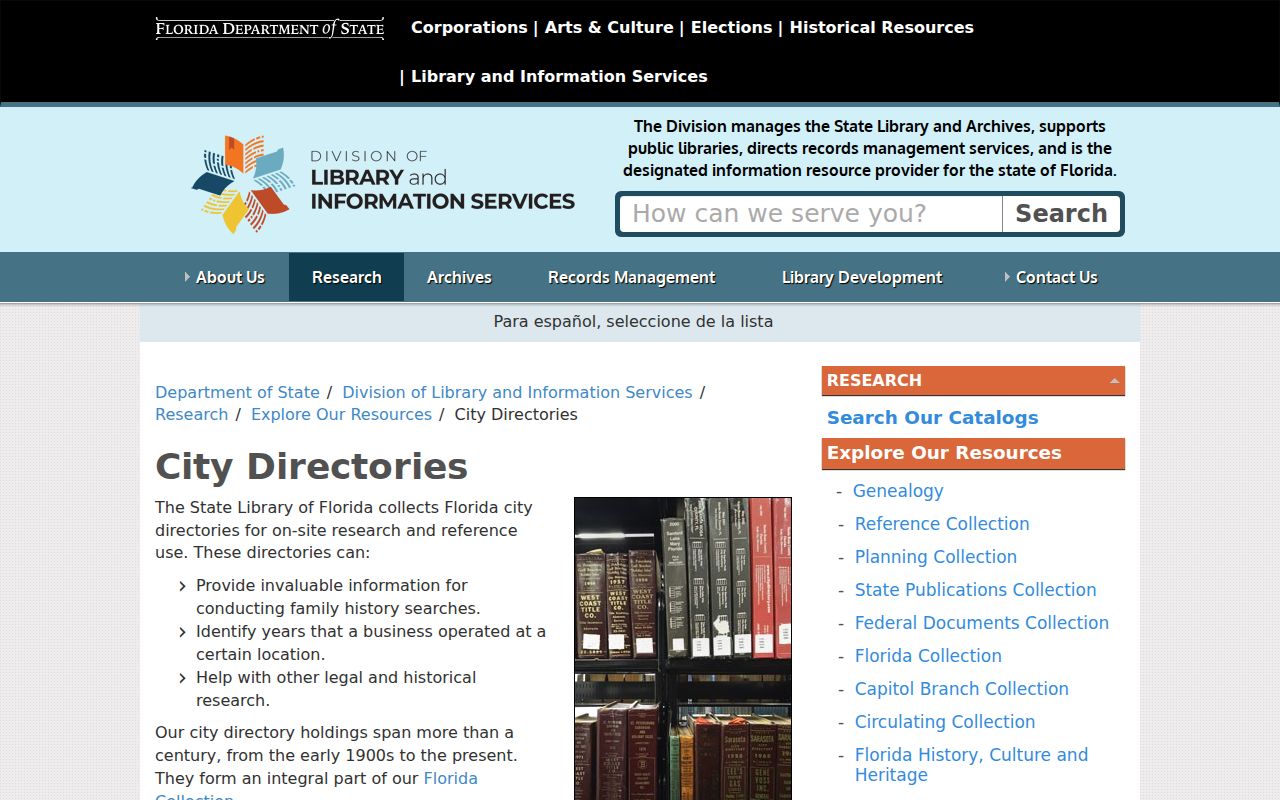
The image shows the collection gateway, not proof of a specific Cape Coral edition. Keep the catalog result or librarian reply with the research notes so a similar title does not get misidentified later.
Cape Coral Genealogy Research Desk
The main Lee County genealogy collection is on the second floor of Fort Myers Regional Library at 2450 First Street. Staff describe it as Southwest Florida's largest print genealogy and local-history collection. Free guides and extended one-on-one appointments can help identify a directory that a broad web catalog misses. The room also provides FamilySearch Affiliate access, which can unlock added digitized microfilm images on eligible library computers.
Confirmed holdings include Florida federal census microfilm from 1830 through 1930, the 1885 Florida state census, Fort Myers Postal Returns from 1850 through 1857, military correspondence and reports, and nearby New York Times microfilm from 1851 onward. Electronic copies are free and paper copies cost $0.10 per page. Interlibrary loan and WorldCat provide another route when the volume sits elsewhere.
The Lee Library interlibrary-loan service can extend a Cape Coral historical-volume search beyond the local shelf.
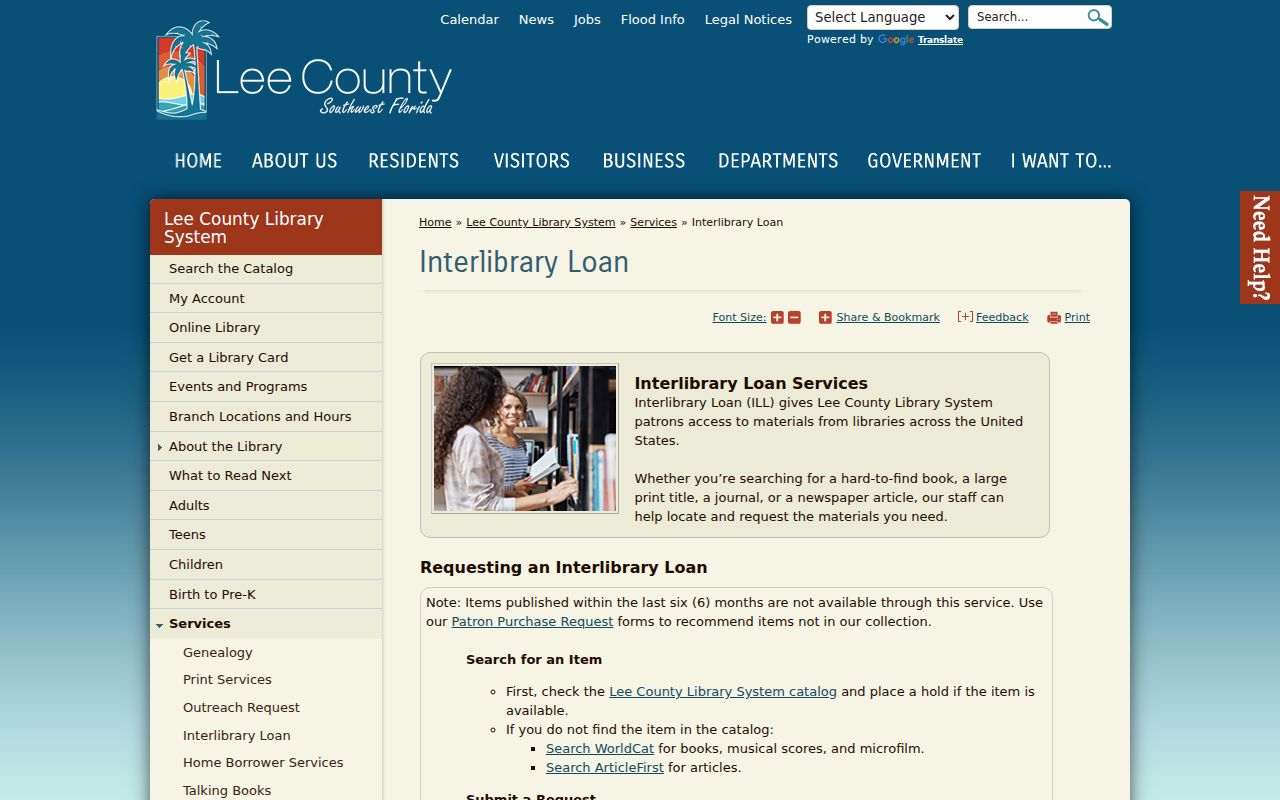
The service is a request channel, while staff confirmation remains essential for editions whose catalog labels are vague.
Note: The Cape Coral Lee County Public Library is a local contact, but the system's main Genealogy Room is in Fort Myers.
Read Cape Coral Directory Entries
Once a verified volume is in hand, start with its abbreviation key. Publishers compressed names, relationships, and addresses to save space, and the symbols may change between editions. Copy the entry as printed before expanding it. Then capture the whole line, not just the name.
| Surname and given name | Identity as printed, including initials and spelling variants |
|---|---|
| Spouse | Often shown in parentheses and useful for same-name matches |
| Widow notation | May name a deceased spouse and narrow an obituary or probate search |
| Occupation or employer | Helps distinguish two people without proving a current affiliation |
| Home and business address | Shows the publisher's reported locations at its cutoff date |
| Owner or renter mark | May appear if that edition defines such a symbol |
Each volume is a dated publication, not a live registry. Its address may reflect when the publisher gathered data, and an omitted person may have declined a listing or been missed.
- Criss-cross directory
- A street-order section that moves from address to occupant instead of surname to address.
- Householder index
- An address-based list of the person identified with a household in that edition.
- Abbreviation key
- The publisher's legend for shortened occupations, relationships, residence marks, and other symbols.
- Cutoff date
- The point when information was gathered, which may be well before the cover year ended.
Cape Coral Directories by Address
If a confirmed edition has a reverse or criss-cross section, browse consecutive house numbers under the full street name. Preserve Cape Coral's NW, NE, SW, or SE quadrant and the exact road type. Repeated numbered roads make that detail vital. A street-order list can place an occupant beside nearby households, but it should be tied back to the parcel and deed chain.
Exact local reverse-directory years were not verified. Ask whether the relevant volume includes a street section rather than assuming every directory does. For a modern address-first search, the Cape Coral street directory covers the Property Appraiser, GeoView, deeds, voter extracts, and permit records without claiming that those sources identify every occupant.
Cape Coral Museum People Trails
The Cape Coral Museum of History, operated by the Historical Society, preserves photographs, documents, artifacts, exhibits, and archival material about the city and Southwest Florida. It is the best hyperlocal fallback for Rosen and Gulf American promotion, pioneer families, early businesses, civic groups, and named residents who may not appear in a conventional directory.
The museum's collection gateway introduces that local archive.
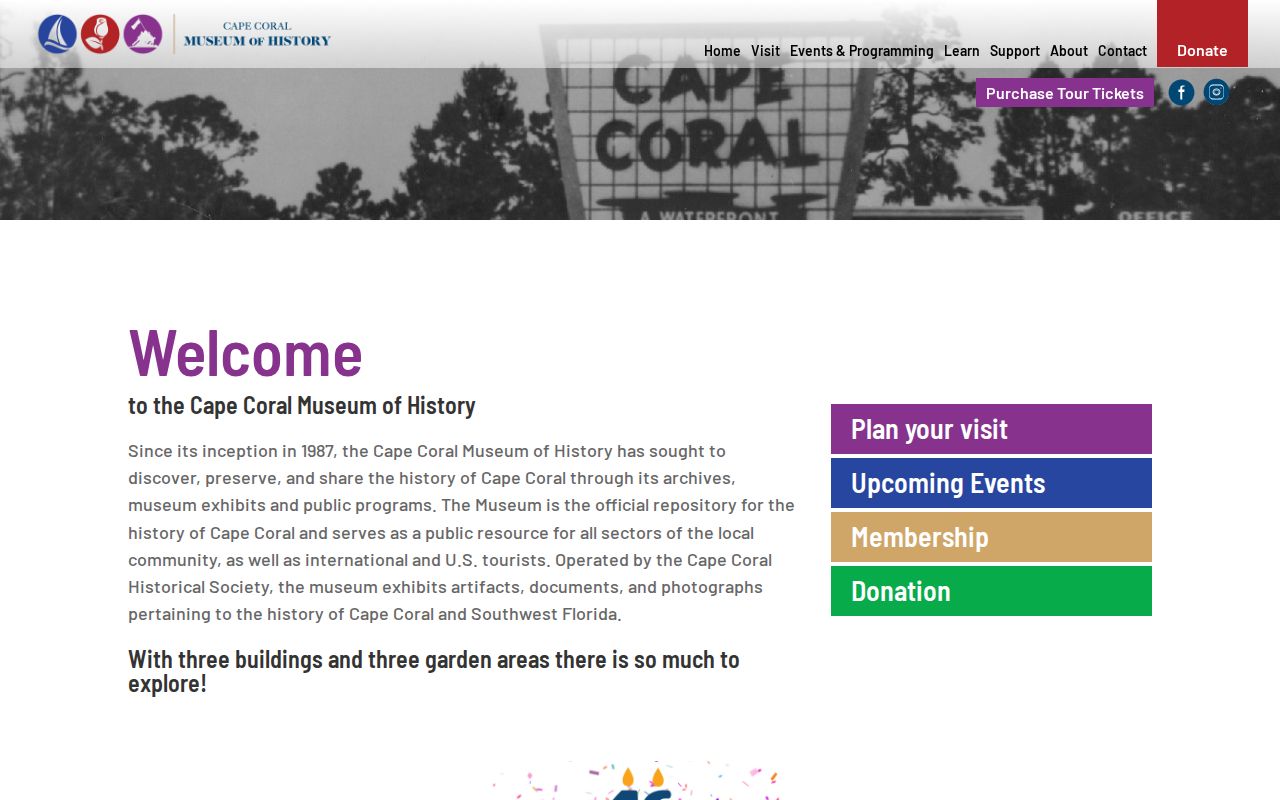
The museum opened in 1987 after receiving the original Cape Coral Country Club pro-shop and snack-bar building in 1983. That origin is itself part of the city's development record. Contact staff before claiming that an artifact group has a searchable name index.
Trace Cape Coral Families by Year
Annual city directories can bridge the long gap between census releases. Cape Coral needs special care because the latest public federal census is 1950, before the city's main development. Use a confirmed directory to track a household into later years, then compare its claims with deeds, tax rolls, permits, probate, obituaries, and museum material.
- Find the earliest verified entry and transcribe its full name, spouse, address, occupation, marks, volume title, and page.
- Check the prior and next available editions. Log each spelling, spouse, work, and address change rather than copying only the latest entry.
- If the volume has a criss-cross section, browse the same address and nearby numbers. Keep the quadrant and street type exact.
- Pair 1950-or-earlier entries with the matching released census. Compare household members, age, birthplace, and occupation.
- For later Cape Coral years, compare the directory address with the deed owner, permit dates, parcel history, probate file, and obituary evidence.
Absence from one edition is not proof that a person moved or died. The person may be unlisted, missed, or indexed under another name. A directory identifies reported occupancy at a point in time, a deed identifies a recorded land transfer, and a census records a household under its own rules. The strongest family-history conclusion states which source supports each fact.
Cape Coral Directory Companion Records
When the city directory shelf has a gap, use a source that answers the next narrow question. Federal and state census material can establish an earlier household. FamilySearch Affiliate images may expose deeds, probate, vital, church, or census records. New York Times microfilm can help with notices, though local newspaper coverage should be confirmed with library staff. Museum photographs and oral histories add local context but still need a name index or staff finding aid.
For Cape Coral's post-census decades, county deeds and city permits are especially useful. A deed proves ownership, not residence. A permit dates construction or alteration and names responsible parties, not all occupants. The city's many absentee installment buyers make that distinction more than a technical point. Build the trail from several dated records and keep any unverified directory run labeled as a lead.