
Choose the Right Cape Coral Resident Trail
A search works best when it begins with the fact that needs proof. The Lee County Property Appraiser connects a person or company to a parcel. Elections records can support a registered residence. Lee Clerk indexes parties to deeds, liens, judgments, marriage licenses, and court cases. Cape Coral's EnerGov system connects an address with permits, plans, inspections, code cases, and licenses. Historical directories, census schedules, deeds, and museum material help with an earlier household.
None of these is a complete roll of everyone in a home. A property owner may live elsewhere, a voter file excludes nonvoters and protected addresses, and a permit may name an owner or contractor rather than an occupant. Build the result from two or more sources and keep dates attached to every finding.
- Search the Lee County property roll by owner, site address, postal code, STRAP, or Folio.
- Check the Lee County voter-information tool when the person can complete its verification fields.
- Use Lee Clerk's Official Records and court indexes for dated legal events.
- Check EnerGov for municipal activity tied to a Cape Coral address.
- Request an unscanned or offline record from the office that created it.
Where Cape Coral Resident Records Are Kept
Cape Coral City Hall and Lee County offices divide the work by record type. City Records Management keeps council material, ordinances, building plans, permits, surveys, dock plans, site plans, and the municipal archive. Lee Clerk holds recorded land instruments and county court files. The Property Appraiser maintains the parcel roll, while the Supervisor of Elections controls voter information. The Cape Coral street directory guide explains how those address-based systems work together along a named road.
Lee County Clerk Official Records
1039 SE 9th Place, second floor
Cape Coral, FL 33990
239-533-5007
Lee County Property Appraiser
2480 Thompson Street
Fort Myers, FL 33901
239-533-6100
Start the Cape Coral Residents Directory with a Parcel
The Lee County Property Appraiser is often the quickest official starting point for a name or address. Its real-property search separates the address where the tax notice goes from the physical site. That distinction is crucial in Cape Coral, where seasonal owners, trusts, companies, and buyers of vacant installment lots may have mailing addresses far from the parcel.
| Search field | Use it for | Important distinction |
|---|---|---|
| Owner or company | Find parcels held under a known name | Try personal, trust, and company variants |
| Site address | Open the land or building record | Keep NW, NE, SW, or SE and the road type |
| Postal code | Build a ZIP-area result set | Mail geography is not the city boundary |
| STRAP or Folio | Return to the same parcel over time | The parcel key is steadier than a name |
The parcel detail can show ownership, site and mailing information, sales, exemptions, legal description, building facts, and links into mapped or recorded material. It supports an occupancy theory, but it does not by itself prove who sleeps at the address.
The Lee Property Appraiser search selection shows the official entry points available to a researcher.
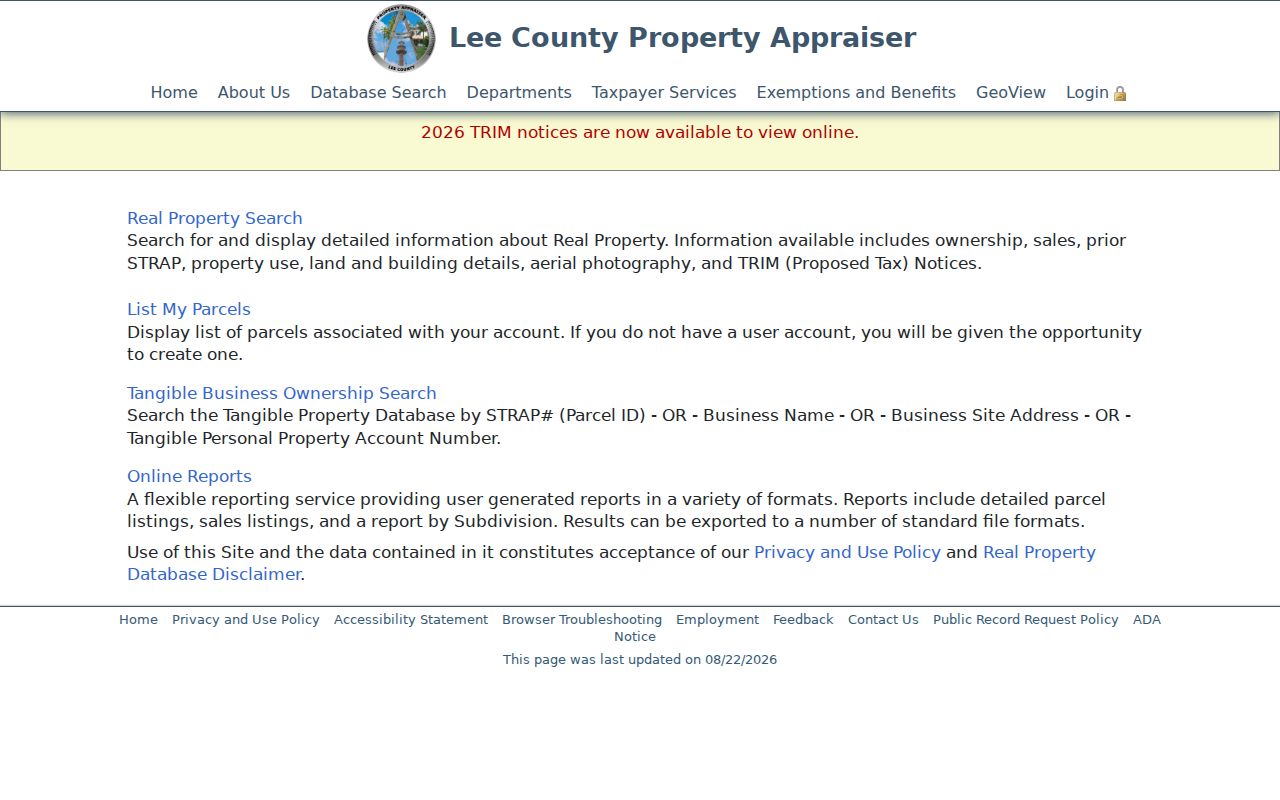
Those choices let a search begin with either a person, a place, or the durable parcel identifier.
Registered Cape Coral Addresses and Voter Records
The Lee County Supervisor of Elections offers an individual voter-information lookup and accepts requests for public voter data. Florida makes much registration information public under sections 97.0585 and 119.07, but signatures, Social Security numbers, driver-license or state-ID numbers, the registration-source agency, and protected addresses remain confidential. A public data order can be filtered geographically, while special service work may carry a charge under the Public Records Law.
Use voter material as dated evidence that a registered voter reported an address, not as a full household list. Children, noncitizens, eligible adults who did not register, and people whose records are protected will not appear in the same way. A current registration also says nothing conclusive about ownership.
The Lee County Elections gateway presents the official voter-information and records routes.
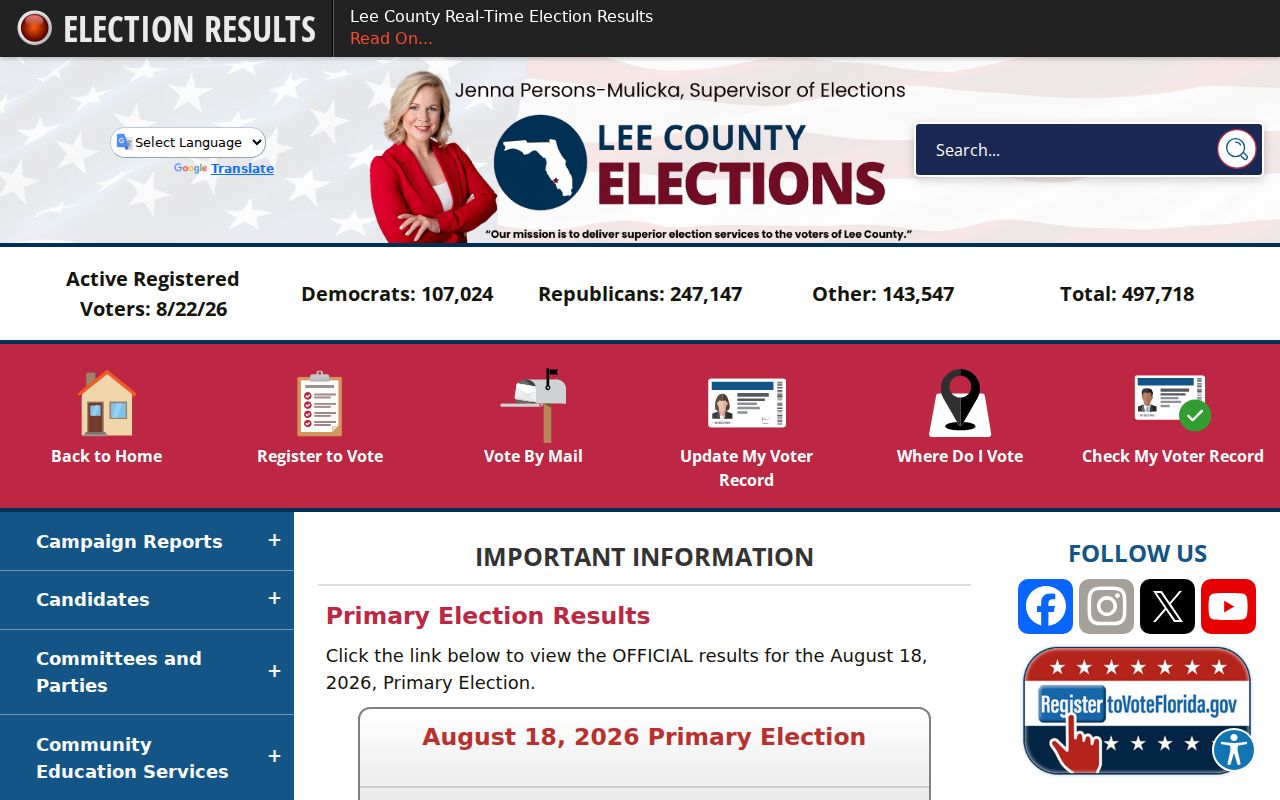
Pair an authorized voter finding with the parcel or another dated record before drawing a residency conclusion.
Lee Records Predate Cape Coral by Decades
Lee County was created in 1887, and the Clerk's searchable Official Records reach back to that year. Cape Coral developed as a large land-sales subdivision beginning in the late 1950s and incorporated in 1970. The difference explains why the county deed trail can be much older than the city's permit, code, minute, or municipal archive trail.
Local history clue. Rosen-era deeds often identify an out-of-state installment buyer, while a later permit, voter record, directory, or census supplies the first sound evidence of occupation.
In South Cape, early shops, civic buildings, and riverfront development tend to create denser municipal evidence. A North Cape lot can show several owners over many years before a certificate of occupancy appears. Keep deed dates and occupation dates in separate columns instead of treating the first owner as the first resident.
Current Cape Coral Residents Directory Sources
Modern public sources answer narrow questions rather than publishing a universal Cape Coral residents directory. The best source depends on whether the clue is a parcel, a registration, a recorded transaction, municipal work, or a public community contact.
| Cape Coral source | People or parties represented | Custodian | Public route |
|---|---|---|---|
| Real Property Query | Owners and mailing recipients | Lee Property Appraiser | Free online search |
| Voter information and extract | Registered voters, subject to exemptions | Lee Elections | Self-lookup or written data order |
| Landmark Official Records | Parties named in deeds, liens, and other instruments | Lee Clerk | Free index; copy channels vary |
| EnerGov CSS | Owners, contractors, applicants, and license parties | Cape Coral | Public search without login |
| Park Community Group Directory | Public organizational contacts, not private rosters | Cape Coral Parks | Free public directory |
Read each row for what it actually proves. An ownership roll does not establish residence; a business officer address is not a home finding; and a civic contact directory does not reveal members. The Cape Coral resident lookup workflow shows how to verify one person across these distinct systems.
Cape Coral Permits Add the Occupancy Timeline
EnerGov Citizen Self Service searches permits, plans, inspections, code cases, service requests, licenses, invoices, and an address map without requiring a public-search account. An address search should retain the quadrant and USPS-style road suffix because the city repeats numbered road names in NW, NE, SW, and SE. Partial input may return several similar roads.
Permit fields can show an owner, contractor, work class, value, application and issue dates, status, zoning, land use, and utility indicators. For a canal property, dock and seawall activity can help date real use of a parcel. Cape Coral migrated about 620,000 legacy permits and 3.2 million inspections, yet some older plans and elevation certificates remain unscanned. Records Management is the fallback for missing attachments.
The Cape Coral Records Management page explains that municipal request route.
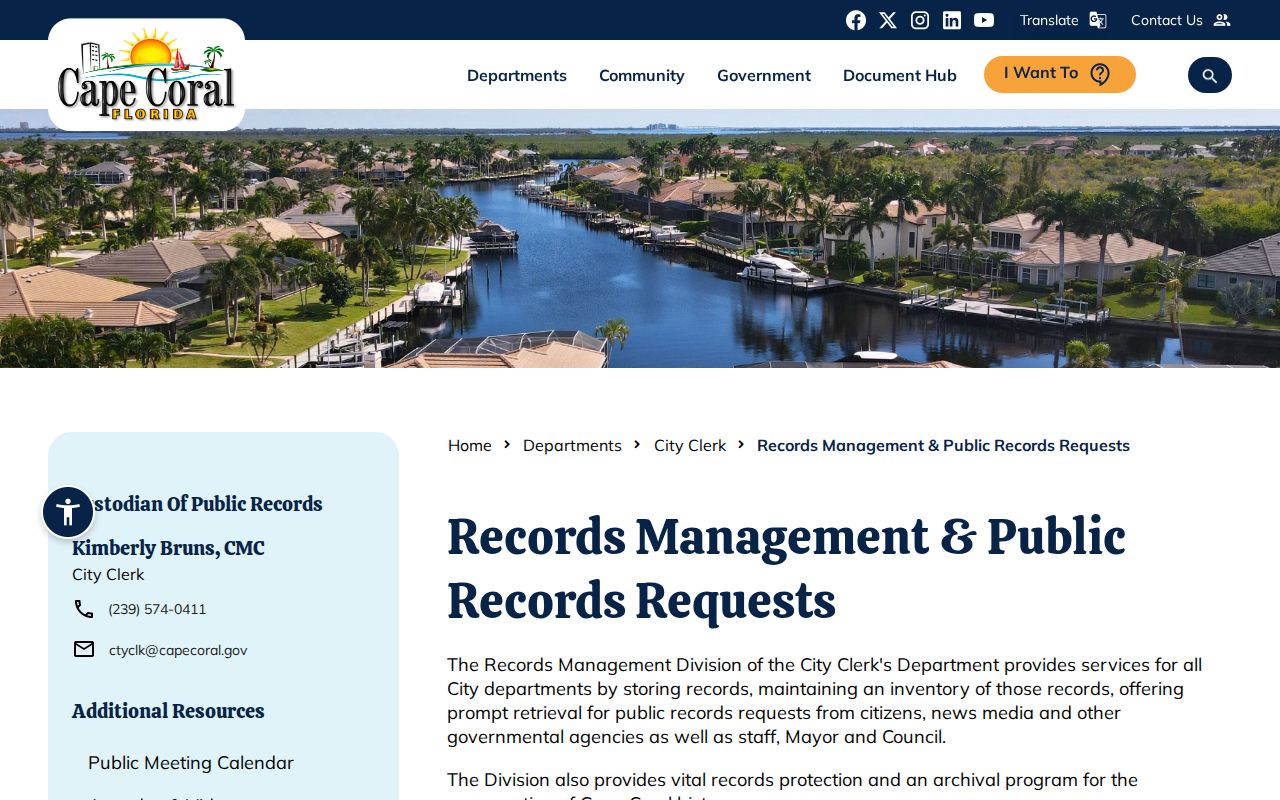
The city accepts nonpolice requests online, by email, phone, writing, or in person, so a blank portal attachment is not the end of the search.
Cape Coral Names in Courts, Businesses, and Licenses
Lee Clerk's court search covers public county and circuit cases, including civil, criminal, traffic, family, and probate material. Search syntax matters: name order, initials, wildcard forms, division, and date range can change the result. A docket is an event list, not proof that every allegation is true. Confidential, sealed, expunged, juvenile, and some family material will not be available through the public view.
For business affiliation, Sunbiz searches entities by name, officer or registered agent, document number, ZIP code, and street address. Filing details can show status, principal and mailing addresses, agents, managers, annual reports, and images. DBPR and other Florida licensing systems can confirm a regulated credential. These are valuable identity checks, but an address reported on a company or license filing is not proof of a Cape Coral home.
Vital Records Put Firm Limits on Resident Search
Florida's Bureau of Vital Statistics supplies birth, death, marriage, and dissolution certifications, while Lee County Health handles local birth and death services. Birth records less than 125 years old are confidential. A death certificate without cause is public, but cause-of-death information remains restricted for 50 years except to eligible requesters. State marriage and dissolution certificates generally begin June 6, 1927; earlier events go to the county clerk.
Marriage certification is not the same as the underlying divorce case file, and eligibility rules still apply even when a related index is open. Use the official application for the exact record. Walk-in, mail, and local health channels are alternatives when the online forms page is not enough.
The Florida vital-records gateway separates those certificate types and request paths.
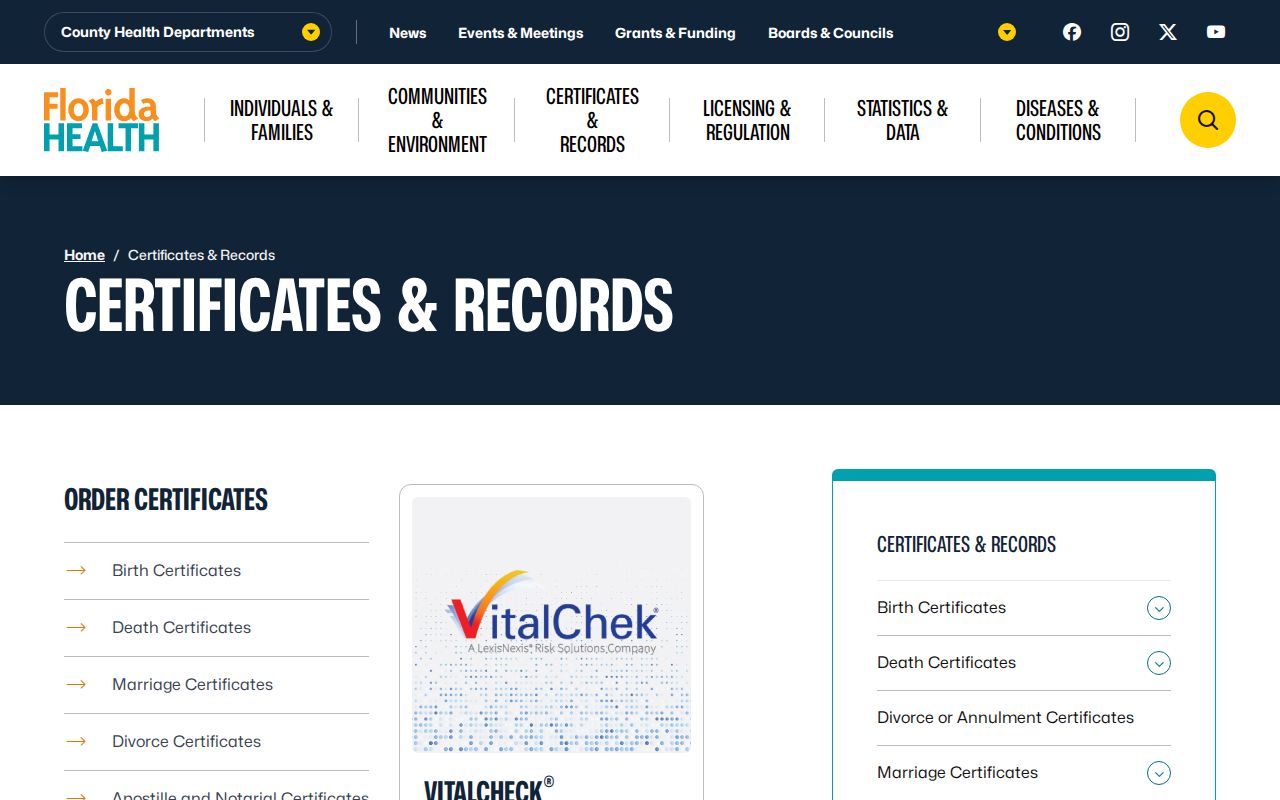
Its forms index is the right place to confirm current eligibility, identification, and submission requirements.
Florida Public Records Requests Fill Cape Coral Gaps
Florida Public Records Law, Chapter 119, and article I, section 24 of the state constitution establish broad access, subject to specific exemptions. A requester generally does not need a special form or a reason. Cape Coral accepts city requests through its portal, email, phone, writing, and the counter at 1015 Cultural Park Boulevard. Lee Clerk and county departments use their own request systems.
Electronic city delivery is normally free. The research lists one-sided copies at $0.15, double-sided copies at $0.20, CDs at $1, and DVDs at $1.50, with staff-time charges possible for extensive work. Describe the department, date range, address, names, and record type narrowly. Remember that the request and the email address used to send it may themselves become public.
Read Cape Coral Directory Terms Precisely
Small differences in records language prevent large mistakes. A roll is an official list assembled for a purpose, such as taxation or voter registration. An index points to a document and may not include its full image. A parcel is a mapped unit of land identified here by a 17-character STRAP. A criss-cross directory reverses the usual name order by arranging entries by street and house number.
Official rolls
They identify a custodian, stated purpose, fields, coverage, exemptions, and correction path. They may be free to search while certified copies cost money.
Commercial directory tools
They may combine stale or mismatched sources, charge for results, and lack a clear official correction path. Confirm every useful clue with the originating office.
Use records lawfully. Public visibility does not authorize stalking, harassment, threats, impersonation, or fraud. Stop when a protected address or closed record marks the legal boundary.
Cape Coral Residents Directory Clues Can Prevent Record Scams
Official sources are also useful for checking an unexpected letter, email, or demand. Lee Clerk warns about official-looking deed-copy solicitations that charge $89 to $95 or more. The Clerk's researched copy rate is $1 per page plus $2 for certification. A mailed offer may sell a real public document, but the seal-like design and high price do not make the sender a public office. Start with the Clerk's published copy channels before paying anyone.
The free Lee County Property Fraud Alert watches for a qualifying deed, mortgage, or other land instrument recorded under a registered name or STRAP. Registration can include name variants and parcel identifiers, which matters when a trust, business, middle name, or spelling variation appears in the chain. An exact match can produce an email within 24 hours. The alert detects a recording after submission; it does not block the instrument, and it does not monitor court documents.
As of July 6, 2026, Lee Clerk reported 86,483 alert subscribers. That scale, along with the Clerk's 2025 title-fraud identity-verification pilot, shows the county moving beyond passive public access toward active notice. A recipient should still open the indexed instrument, compare its parties and legal description with the parcel record, and contact the Clerk through a known official number if anything looks wrong.
Cape Coral separately warned in March 2026 about fraudulent email impersonation. The safest response to a payment or account-change message is to ignore the contact details inside it and verify through a city number already published on Cape Coral's official website. Lee Clerk likewise says it does not call, text, or email demanding money or personal data. Jury messages can be checked at 239-533-2929 or jury@leeclerk.org. These steps turn the residents directory trail into a verification tool without treating an unsolicited message as proof.
Historical Cape Coral Residents Directory Evidence
Cape Coral's late start changes the historical shelf. The State Library of Florida catalogs city directories, but the exact Cape Coral year run and publishers must be confirmed in its catalog or with reference staff rather than guessed. Earlier regional volumes may be filed under Fort Myers or Lee County. The Fort Myers Regional Library genealogy room, a FamilySearch Affiliate Library, provides staff help, microfilm, and interlibrary-loan routes. The Cape Coral Museum of History adds developer-era photographs, promotional papers, artifacts, early organizations, businesses, and named residents.
A directory entry may include a spouse, widow notation, occupation or employer, street address, and sometimes an owner or renter mark. Reverse directories arrange the same evidence by address. Log the exact edition and abbreviation key, then compare consecutive issues with the 1950 census, deeds, and later permits. Absence in one volume does not prove departure, and a deed from the land-sales era may document title long before anyone occupied the lot.
Use the dedicated city directory page for the collections and reading method, and ask a librarian to verify holdings before making a special trip.